
Riverlogue

This blog originates on the banks of the Atchafalaya River, in Louisiana. It proposes to share the things that happen on and by the river as the seasons progress. As the river changes from quiet, warm, slow flow to rises of eighteen feet or more, there are changes in the lives of the birds, fish, amphibians and reptiles that use the river. And the mood of the river changes with the seasons. I propose to note and comment on these things.

My Photo
Name:
Location: Butte La Rose, Louisiana, United States

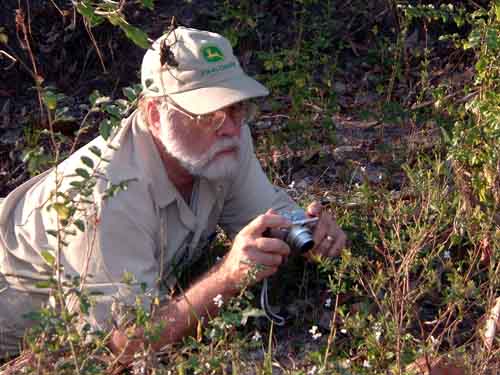
I transitioned a few years ago from a career as a water-pollution control biologist. I want to do this blog to stay in touch with a world outside my everyday surroundings, whatever they may be. I like open-minded company and the discussion of ideas. Photo by Brad Moon.

Friday, January 23, 2026

How this came to be: recorded transcripts of many people who lived on houseboats in the Atchafalaya Basin

                In 1974, I came back to Louisiana after spending about four years , off and on, in Tempe, Arizona at Arizona State University. I came back because it didn't look like a Doctorate was going to happen. I had always enjoyed fishing, and I knew that some people make a living catching and selling fish.  I wondered if I could do that too.  So, I got a commercial license (?) and bought some nylon line and set out to learn to fish catfish, etc., in the Atchafalaya River Basin.  After about a week of not doing very well, one day I went to my line and found a "real" fisherman there.  He was Joe Sauce, 20 years old.  I said "Hello" and he asked why I had tied my line to a pole that he had placed there and tied his line to.  I apologized and he said, "No problem" and then asked what I was doing there.  I said I was trying to become a fisherman.  His response was "Like that?"  Sensing his negative judgement, I asked what I was doing wrong.  He was a person who expressed himself freely, and he mentioned about 10 things I was doing wrong.  Since he did this with kindness, I asked if he would mind teaching me the right way to do these things, and he talked for about 15 minutes [maybe not that long] nonstop explaining the right way to set a trotline under the current conditions. 

Well, this was the teacher for me!  But I was in conservative country, and I had shoulder-length hair and a full beard, neither of which was common in south Louisiana at that time.  He said, “Are you one of those hippies?” Knowing that if I said “Yes”, his offer could evaporate, I said, “No, I just need a haircut”.  He seemed OK with that, and off we went, him expertly practicing his craft, and me paying attention to everything he did.  For the next several months, if he spit into the water, I knew what side and how far it went!  Gradually, after many days, I started doing some things well enough to get a quiet “OK” from him.  In the previous year, I had passed all seven exams for a PhD program entrance, the first to pass all seven exam- days the first time through.  Previous students had to retake at least one of the seven days.  And I was more concerned that Joe would say “Ok”, than about those PhD requirements!  OK, one hurdle cleared, sort of.  But now there was another one.  If you catch fish, how do you turn them into money?  Obviously, somebody had to pay you for the fish you caught.

                Most of the time there is an established link between the fisherman and the person who pays him.  Either the next step, the fish dock, has a collection system that has trucks that visit the fishermen and pays them for the fish they catch.  But at Myette Point, there was no way for a truck to reach the fishermen’s location unless one of them took it upon himself to acquire a truck, pay the fishermen, to delive the fish to the dock miles away.  This person was Albert “Myon” Bailey, a fisherman himself, and a resident on the levee in the community of Myette Point.  He purchased a vehicle that could traverse the several miles of shell road and deliver the “community” fish to the dock at Calumet about 15 miles away.  This was entrepreneurship at its best.  So, about 15 fishermen would come by boat to the levee, where they lived, at the Myette Point Community, sell their fish to Myon, who would pay them cash for the fish, and deliver the fish to the commercial fishdock, completing the required path from the harvester of a product [fish and other materials] by the commercial fishermen, to the next step in the processing of the fish, the commercial dock. From there, the fish would either be sold retail to individuals or wholesale to larger communities, some as far as the West Coast of the U.S.   This latter would require ice for safe shipment by train.  If something happened to delay the train en route, and the boxcars containing iced fish were delayed several days, the fish would spoil.   In these early days, there was no mechanical refrigeration, only ice, which melts. 

                And so, I became a fisherman, or at least I thought I was.  One big thing remained to complete the process of earning a living…somebody had to agree to buy the fish I would catch.  Since I fished from the Myette Point landing, the resident fish buyer was Myon Bailey.  He held all the power now.  If he didn’t like the way I looked, or for whatever reason, he said “No”, I was not going to fish.  But he said “Yes”, and I about floated with relief. I was a member of “the community”, and the feeling of belonging was awesome. Now I just needed to catch fish to sell to him. 

                So, I began to set lines with hooks to catch catfish.   Using the advice Joe Sauce had shared with me, I soon had 1000 hooks in the water.  Now, what came next was how to get bait and what kind of bait to get.  This was not simple, you had to learn how to catch bait, not buy it.  And now comes the next person who became my teacher.  It was Joe’s father, Cleo (Neg) Sauce.  He was an easygoing person who agreed to let me follow him around and learn his tricks, which I gratefully did.  Knowing Neg was the reason I got my first real line fishing boat. It was a gift from Neg and his wife, Nine.  [pronounced Neen].   The boat was about 14 feet long and made of cypress…a typical “skiff”, with a blunt bow at the front.    The boat had been sunk for a long time to preserve the cypress, and it worked, once it dried out, and the bottom was replaced [due to age and long use], it was a perfect line-fishing boat. 

That Easter I was invited to Neg’s house for dinner with his family.  When I got there, I met the children, who included Joe and his 4 sisters.  The meal was a fish dish, which was excellent!  After that invitation, I really felt that I was more and more being accepted to the extent an “outsider” could be.  A few days later, Neg showed me how to catch river shrimp by finding a bayou bank with willow roots growing underwater and scraping the roots with a net to catch the shrimp hiding there.  It was a good thing to learn, however, from others I learned that you could make “shrimp bushes” out of wax myrtle branches and suspend them in the water to attract river shrimp.  It was more work than “dipping the roots” but more reliable and you could control the number of bushes you made to attract the shrimp.  More about shrimp bushes later.

But now, let’s start back in 1974, when I made the first audio recordings of Myette [me ett]   Point people.  It begins with Albert “Myon” Bailey, considered the patriarch of the community by some, and his wife Agnes.


Blog Chapter 1

DATE:                        1974

 INTERVIEWER:      Jim Delahoussaye

 LOCATION:              Albert (Myon) Bailey’s house at Myette Pt., St. Mary Parish,

 COOPERATORS:   Myon Bailey, Agnes Bailey

Myon was married to Agnes Sauce, the oldest child of Blaise Sauce and his wife Rosalee.  Agnes had 5 younger brothers and one sister.  Blaise Sauce died at age 41, leaving his wife and six children without income. Myon decided that it was his responsibility to take charge of the remaining 5 children.  He was talking to Agnes about how best to teach the boys to earn an income by fishing.

Myon: “Oh Mother, you broke, we ain’t got no money? You would like to go back up the lake and fish? Right there at Blue Point. Leaving from Lake Verret. That’s where I was supposed to be headed.” 

Mertile Theriot, the fishboat operator says “I tell you what…” he says… Them boys was young, you see? Myon said, “Look, I’m takin responsibility for all their bills, that’s on me”.

JD: When you say “Them boys were young”, which boys are you talking about?

Agnes: My brothers.

Myon: Monug (Preston), he died…and, and Robert, he lives in Calumet, and …

JD: Are those your brother?

Myon: No, Agnes’s brothers. Several of em. So, I told Mertile that. And he say “What you need?”. Well, I say, “First I need about 30 gallons of gas” and I say “About 20 pound of line, I guess…25 pounds, 1000 hooks. “Well”, he say “if you take charge of them boys” he say “you can have anything you want”.

JD: Was he living with y’all (her brothers)?

Agnes: We (Agnes and Myon) lived with them.

Myon: We lived with them ‘till I got em out of debt.They had a big camp, we had a lil camp, that’s the way it was.The large campboat had belonged to their father, Blaise Sauce, who had recently died at age 46, leaving his wife and their children on this larger houseboat.

JD: A floating houseboat?

Myon: Yeah. So, I told em, I says, Boys, it’s this a way”, I say, “Y’all gone live with me.  Y’all gone do what I say, now. I’m y’all daddy for a while. What I say gone go.”

JD: How old were they, the oldest one?

Agnes: Oh, Monug must have been about 20…

Myon: Mmm, I don’t think that old.Tootsie about 15. 

JD: And how about you?

Agnes: Monug must have been about 18 when daddy died.

Myon: I guess. I don’t know, I must have been about 45. I guess, around there.  So, they agreed to that.  “What you say, go”. Pull (row) up the lake, there, and in one month…we owed 500 somethin dollars, plenty money in them times…I pulled them boys out of debt. And we saved about $300.  I divide the money and “Y’all go on y’all own now. Y’all take yall money and your sister”. They had Yank (their sister) with em.

JD: Who?

Myon: Bootsie’s wife. I say, “Y’all gone make a living for them now, and I’m gone see y’all gone MAKE a living for em”.

JD: How many boys?

Myon: Two…

Agnes: Three, three boys.

Myon: Anh? Well, Neg…Neg was a lil boy…Neg wasn’t old enough yet. And, after that…”That’s…that’s y’all part now” I say, “I’m goin on my own”. I didn’t want to run their life all the time, you see?

(To clarify, there were two young men, Preston [Monug] and Robert [Tootsie], one boy, Cleo [Neg] and one unmarried daughter, Yank [Ophelia], and their mother, Rosalee)

Myon: So, they agreed to that. And them boys done good for theirself. They built a new campboat and sold the old campboat. At least, I’m the one build em the campboat, and Neg helped me build the campboat for em, brand new campboat.

JD: Where did y’all build it?

Myon: Right at Blue Point.

Agnes: That cabin Neg’s got…Neg’s livin in (living at Oxford in the cabin off of that houseboat)?

Myon: Yeah, that cabin Neg’s got, that was the campboat.

JD: Well, there must have been a lot of good land there, a lot of dry land there at that time.

Myon: Oh YEAH.That’s what I tell you, in them times you didn’t have high water like you got there now.They had ridges…all of that was nothin but ridges. Along the lakeshore, all that was out of the water all the time, or most of the time. Oh, you get a high water in the spring of the year, but it wasn’t no more than two or three feet. 

JD: And then it went back?

Myon: And then it went out. And them boys done good for themself, and I went on my own, and…that’s why they look at me today like I be their daddy. I can talk to them boys today like I talk to one of my kids.They listen to me. 

 JD: And you pulled everybody out of debt that quick, y’all made over $800…yall made over $800 that month?

 Myon: Oh yeah! And live! Live with that. We had three boats we was runnin.  You see, I had one man, one boy, just a…it was Tootsie…after bait, all the time.  Me and Monug was fishin. Livin at Blue Point [Blaise's Canal] and fishin on this side, at Myette Point. Fish was bitin! Man, them fish was bitin! Mertile would get there with his fishboat and them catfish was there in them fishcars with the tail up [fishcars were full].Yeah he be livin today he could tell you. And he say “I knew you’d do it”.  He had a confidence in me, but I …

 JD: You mean you had one man going after bait full time? 

 Myon: Full time.That was his job. Me and Monug…me and Monug would…

 JD: What kind of bait was he catching?

 Myon: Mostly live perch. We fish with cut bait, you see, with cut perch.In that time, that’s what we were using. 

 JD: Cut perch. It didn’t matter how big they were, or…?

 Myon: No. Just (big enough) to make a cut bait. Just cut it up for bait.

 JD: Traps? He was using traps to catch perch?

 Myon: No. Well, he had traps, but he’d go over there and fish with a line. Them perch was bitin, they had plenty perch.

 AB: If they didn’t bite (the perch), he’d dip em, under the lilies. 

 Myon: Sometime…sometimes he come and fish, if he had plenty bait.

 JD: How long a day?…now, you say you had 1000 hooks when you left Morgan City…you each took about 500?

 Myon: Oh, we ended up with more than 1000 hooks. We started with that, and as the boat (fishboat) come up and pick up our fish we bought hooks and line and kept fishing (more hooks). At times we didn’t have 1000 hooks (fishing) all at once]. We had plenty of hooks. Sometime 500 hooks was plenty hooks in them times, for us to fish. 

 JD: Yeah, to make a livin for yourself (one man). That was plenty. How long a day do you think yall were putting in, in those days, like that?

 Myon: Jim, we didn’t fish all day long. But every day we’d go…we’d run our line, and we’d come back. Sometime we’d go back in the evening and make another run, come back in. You know how fishermen do.

 JD: And yall get across in a powerboat? 

 Myon: Yeah, we had them Lockwoods. Two-horse Lockwoods, six-horse Lockwoods. I used to have two-horse Lockwoods I fished all the time in. I had a six-horse too, a lil bit faster, you know? 

 JD: Skiffs? 

 Myon: Skiffs, yeah.

 JD: What kind of line did you fish in those days?

 Myon: Cotton. Cotton line, and in three weeks you had rotten line too, let me tell you! Them stageon, eight, nine days…we didn’t stain our stageons. After nine days you could start breakin em. Cotton.

 JD: And y'all hand made your swivels? 

 Myon: Yeah. 

 JD: You still fished with swivels back then, eh? Well, did your lines look like bent lines like we fish now?

Myon: Yeah.

JD: But you’d drive poles, or you use stob poles? 

Myon: No, we didn’t use stobs in them times. We drove poles all the time.

JD: Just poles. Boy, that’s really something.

Myon: Yeah. And you made that much money, and you weren’t getting but seven or eight cents a pound for your fish?

Agnes: Shee, when we was getting eight cents a pound, we was getting plenty!

Myon: I remember we was getting around ten cents a pound for our fish then, eh?  I don’t remember exactly, but in them times around ten cents. That was a pretty good price.

JD: That was around 1938, somewhere in there?

Myon: Umhm. 

JD: And then when the war broke out, 1940, let’s say, the price of fish must have gone up pretty good, eh? 

Myon: A little bit, Jim, umhm. But they had boats come there and pay as high as 25 cents, some boats out of Houma. You know, make a run when they needed fish like that? That was Joe Spagnol, we used to call him, that’s a Houma boat.  Come in there, them other boat had to come up [in price] with him, you know?  He’d raise the price when he needed fish, you see, that’s why he’d come in. 

JD: And y’all would sell to him.

Myon: Well, we’d sell some.Try to keep him in there to hold the price up.


Saturday, June 22, 2013

The Sharks Are Back, and So Am I


            At least for this post anyway.  Yes, the sharks are back in the Atchafalaya Basin, and they are early this year.  I was down at Myette Point (St. Mary Parish) this past week and my friend Edward Couvillier is having his trotlined catfish cut in half by sharks already. And he is 40 miles from salt water.  I say already because most of the time the water level has to be pretty low (down to 4 feet or less) for sharks to begin their annual ascent of the Atchafalaya River.  This year the water gauge at Butte La Rose is still up at about 14 feet – very high for sharks.  Last year during the late-summer shark season I went out with Edward to see what was happening.  Sure enough, as he ran the trotline he began to find fish that were still on the hook, but only a dead head remained.  It makes you think of all those fish just caught with nowhere to go and then comes this mouth full of teeth and…

And then we came up to a fish head that was not showing that glassy eye that dead fish show, because it was still breathing.   Just a head, with the gills going in and out.  Now, up to now I had been thinking that these fish had been eaten the previous night.  I don’t know why I thought that, but somehow it seemed more in keeping with the shark demeanor for it to be hunting along in the darkness.  Yet, here was this live fish head at 8:00 a.m.  Picture the water below the boat, about 10 feet deep, with feeding sharks maybe a couple feet from you down below.  How big are they?  Who knows?  The biggest one I know of from near here was caught around  Henderson a couple years ago and it was a six footer. Even though there has never been a reported attack in the Basin, these are not small fish.

            On another shark tack, some of you know that I do a type of archaeology that involves identifying animal bone (non human) from Native American sites in Louisiana. The last site that I did an analysis for was one that is in what is now St. Mary Parish, near Patterson.  The bone from this site contained two shark teeth from the same species that we get in the river every year – the bull shark (Carcharhinus leucus).  And also within the bone sample was a single shark vertebra.  There was a hole drilled in the center of the vertebra, probably to allow a series of similar ones to be strung together like beads, perhaps as ornamentation of some kind. 

Anyway, these discoveries suggest that Native Americans in south Louisiana were making use of sharks in the lower Atchafalaya Basin 1400 years ago.  As a matter of fact, I would imagine they were much more aware of the sharks than we are today, even though the fish have been annual visitors to the waters of the Atchafalaya Basin ever since, and the number of people who might observe them has multiplied many times.  I guess we just don't need to know, so we don't.

             The river gauge at Butte La Rose reads 14.3 feet today, and will remain about 14 feet for at least the next seven days.  Very high water for this time of year, and the crawfishermen are loving it.  Amazing numbers of trucks and boat trailers at the Myettte Point landing, most of them from Catahoula it seems.
 
Rise and Shine, Jim


Thursday, September 01, 2011

Wildlife and Windy Rain


            Once again there is something weather- related to note.  I often wonder about the birds and other animals that find themselves exposed to weather events.  We humans see rain coming and we find a way to acquire shelter if we can.  I’m sure the birds do the same thing but whatever they find to hide under will not be complete protection most of the time.  Of interest today is the fact that we pretty much always have some advance notice of impending seriously bad weather.  Right now there is a system out in the Gulf of Mexico that is getting its act together for an assault on the Louisiana coast.  Right now it doesn’t seem  to be a big windy storm, but more of a smaller, rainy one.  Really rainy, they say.  Does the wildlife know this too?  Adding a few things to the usual accounts of the unusual prestorm  doings of ants, chickens, horses, etc, will not hurt the universe I believe.  So here is what I see along the river today.


Sunset tonight
            Sitting here at home on the Atchafalaya River and looking at the conditions in the back yard will bring thoughts of the kind of observation that might be possible due to the advance notice of bad weather.  The observations in this case would be the kind that notices behavior in the animals normally doing what they do and the behaviors that might not be so normal.  All this is purely speculative, of course, what the scientists call unreliable data.   First of all, the birds.  This is the easiest thing to note because the birds are so clearly visible.  But what birds are they and what are they doing this afternoon?  Down at the dock I see cattle egrets across the river.  There are about 30 of them and they are all standing on the riverbank just kind of passing time.  Once in a while there is a disagreement of some kind and a couple of them jump up in the air and then settle back down, standing calmly.  I don’t recall ever seeing a big flock of cattle egrets doing this along the river.  A few yes, but a flock, no.  There doesn’t seem to be any feeding behavior either.  They just stand there, looking around.  I wonder, are they preparing for surviving wind and constant wetness for several days in a row?  There is no escape except leaving the area, and is this what they are preparing to do?  It’s as though they are using a group meeting, or a big committee, to make a decision.  After about an hour, the whole flock took to the air and flew away low along the river.  Oddly, they flew toward the east, which is where this storm will probably come from.  Perhaps the committee needs a new chairman.


            Some birds are more susceptible to the bad weather in that they probably cannot fly away from the places to be hit by the, mostly because they are either too small or just don’t fly long distances.  I’m thinking of the resident species that just never leave home, such as the mockingbirds and some woodpeckers.  Looking out at the back yard there is a different behavior going on among and between these species.  The mockingbirds are chasing each other all over the place, and the red-bellied woodpeckers.  It is not the chasing that is unusual, but the extent of it, going on non-stop all over the back yard.  The cardinals join in it too.  Chickadees and titmice are just on the edges watching all the commotion.  These are birds that will all be wet probably beginning tomorrow and then perhaps for the next four or five days.  Are there behaviors that we can see that the birds might be doing in advance of the bad weather?  Surely the chasing is not a practice that will keep them dry, but might it not indicate a heightened state of nervous tension?  Or maybe the abnormal amount of activity signals something else not easily described. 


            There is a speckled kingsnake in the garage, in a container.  The snake is usually very docile and quiet, but today the snake is crawling all over the environment available to her.  Could be coincidence, probably is.


            The river is at 4.6 feet on the Butte La Rose gauge.  Left alone it would probably remain there without much change for the next week or so.  The Ohio and Mississippi are not supporting any immediate changes.  But if this weather, with “historic rainfall” predicted, does come in the next couple days , the river will notice and raise an eyebrow.  It could rise several feet and we would have to be ready to retie the dock each day.  Unlike the rivers in Vermont, etc., the Atchafalaya is a big river with a relatively small collecting basin.  So we will get the rain effect, but not a flash flood.  I know this because my magic crystal ball says so.

            Rise and Shine, Jim

Sunday, July 31, 2011

Back to Normal

            At least that’s what it feels like.  It’s hot and the grass is growing, and mosquitoes let us know they like the rain too.  We are seeing the first major hatch of mosquitoes in over two years, kind of unusual for our part of the swamp to go that long without them.

           
            Back- to- normal things include new grass.  Where the May high water left four to six inches of new soil in our yard, there is now an equivalent amount of new, very green, grass.  Mostly the new growth seems to be blue grass but the centipede variety will come in and outcompete it next year.  The barely noticeable burning ring will have to be dug up and reset, but the new soil is a modest gift from the river and moving the ring won’t take much effort.

That's our girl!
            I spent some time shoveling away the several feet (not so modest a gift) of mud/sand that annually covers the bottom several feet of the steps leading to the dock, and out popped a snake.  Our  granddaughter is back in the river swimming as often as she gets the chance and today she got to spend some quality time with the snake.  It is a glossy crawfish snake, harmless unless you are a crustacean, and the bluish eyes say it’s about to shed its skin, which made it even more docile than normal.


            Remember all that mud that was on the deck?  It is gone of course and in its place there are three new benches made from recovered lumber originally part of a Cajun swamper’s house in the Basin.  The wife was part of the Burns family saga in the Atchafalaya during the last century.  So, the benches are sort of a recalling of a real swamp life, lived by real swamp people.


            And the water is low enough now to begin fishing with a rod and reel.  Today I caught some catfish, an eel, two garfish, a buffalo and some gaspergou.  The gaspergou and catfish will probably end up in a courtboullion next weekend, and the buffalo will be turned loose since I have no use for cut bait before I get the trotline out. The eel was cut up to bait the shrimp traps and the garfish were too small to do anything with. 

          
  If you spend enough time looking out over water you see things come up and make the break from that environment to ours.  Logs rise to the top and sink again, nutria appear and swim and then disappear for their own reasons.  Fish do the same thing as the nutria, except in reverse, sort of.  They come up into the air and then go back. You can look out over water and you will see evidence of fish doing this but usually it is too late to see them, you hear the disturbance and see the splash but not the fish.  Except occasionally. The river is filled with gar and buffalo right now and most of the time they cause the splash and swirl of waves.  Often I have thought that you would have little chance to actually see one of these fish as it breaks the surface, I mean, you would have to have your eyes on the exact spot when the fish came up.  But today it happened.  I was fishing and looking at the river and right in front of my eyes there arose this huge garfish.  I saw its head, and torso and tail as it came up -  broke the surface, breathed, rolled and then brought its tail up and slapped the water just like on the whale shows. Wow and wow.  A person who believed in such things might have thought there was some communication intended, but nah........…nah. 


            The river is at 8.0 feet on the Butte La Rose gauge, falling to 7.5 by the end of next week.  Remember when it was at 23 feet just a little while ago? The Ohio and the Mississippi both show some rises up north, so they are not ready to give up their influence yet.  I can put in my trotline at 8.0 feet so it’s time to consider that.

            Rise and Shine, Jim

Wednesday, June 15, 2011

2011 High Water – Nineteen

Well, we are settling in, or resettling in, I guess. The water is down off of the deck and the six inches of mud on it has been brushed away. The river is becoming more calm by the day. Throughout this whole thing there has been a remarkable lack of debris in the channel. Commercial fishermen noted this to me yesterday, and I certainly agree. After predicting the huge amount of accumulated litter that would come down once the Morganza gates were opened, it didn’t happen. What did come down was much smaller than anticipated, the individual pieces I mean. Not the huge trees and floating islands of logs and tangled masses of smaller vegetation that I thought would come.

There is a strange item that came up yesterday during a visit to the southern end of Grand Lake. Talking with Edward Couvillier and Kevin, his son, is always an enlightening experience. Both commercial catfishermen, they use lines and hooks and fish the hard way, at least that's how it seems to me. The odd thing was that they caught a stingray yesterday out in the lake. The water is still high by anybody’s reckoning, and the stingrays should (my word) not be up in the freshwater yet, not until the water is very low and allowing some salt water to sneak into the usually fresh lower Atchafalaya Basin and Grand Lake. But they are coming up nevertheless. I wonder if the sharks will be early this year also, giving the fishermen headaches much earlier than usual. The closeup of the sting from the ray shows why it’s not a good idea to get punctured by one. Not only does it not come out easily, the mucous on it hurts, a LOT.

The river is at 17.8 feet on the Butte La Rose gauge, continuing to fall slowly for the foreseeable future. The Missouri is flexing some muscle, but that shouldn’t affect us down here. The Mississippi and Ohio are both falling slowly all the way up, as they should be doing right now. At this slow rate of fall we may not get to the low water period for this cycle until August. Crawfishermen are not complaining, or at least not more than they usually do. Passing on the levee yesterday, I saw literally hundreds of trucks parked at the six or seven landings being used by the wild-crawfish fishermen right now. Looks good for them.

Rise and Shine, Jim

Thursday, June 09, 2011

2011 High Water – Eighteen

Night Visitors. There are night visitors in the back yard. Today Flurry the Cat and I discovered the evidence. Beings with cloven hooves are walking up and down the riverbank in the darkness. The water is still high in the swamp that extends out to Henderson and I guess some of the animals who live there prefer a drier place. I don’t mind the deer, but now I will be looking for the foliage in the yard to show signs of nibbling.

The river is at 19.5 feet on the Butte La Rose gauge, continuing to fall slowly. The Ohio and Mississippi are both falling all the way up. No more water coming from them soon.

Rise and Shine, Jim

Tuesday, June 07, 2011

2011 High Water - Seventeen

So the excitement begins to fade. We are no longer looking at a charging wild animal. Facing us now is something resembling a sleeping cat, calm and relaxed, becoming more and more relaxed as each day passes. Soon it will just be the river we knew before.

The markers we kept track of as the water rose are the same ones we now watch as the water recedes. It is easy to see the outside rail on the deck, at least it is easy to see now. It sits at about the 21 foot level, and the water is about ½ foot below it. At the river’s crest, the rail was under about two feet of water. The oak and cherry tree had water up past their trunks, and now it is retreating out toward the channel.

A thick coat of mud covers the ground where the water stood for several days. Grass will grow well there, the mud is rich in those things which cause plants to grow. But that richness does no good for the walkway and the deck floor, and I am clearing it off as the water reveals the mud. It is sobering to think that that same mud might have been covering the floor of our house instead of being harmlessly covering outside structures. Yes, a lot to be thankful for.

It is also sobering to hear of drastic responses to the near-miss that we had here in Butte La Rose. I say drastic because some of the reactions people have don’t seem to be merited by the degree of danger we actually suffered. We had a near-miss, not a full blown catastrophe, but some people are leaving the community forever because of an emotional response to the threat. One family has been here for 37 years, and they are now looking for a house to buy elsewhere, where the water cannot come. These are people who have been at the heart of the development of the community. They will be missed.

The river is at 20.4 feet on the Butte La Rose gauge, falling slowly toward a summer low of perhaps four or five feet. The Ohio and Mississippi are not doing much. The Missouri will send some water to us, but not in the volume that caused the current crisis. It just doesn’t have the muscle that the Ohio does.

Rise and Shine, Jim