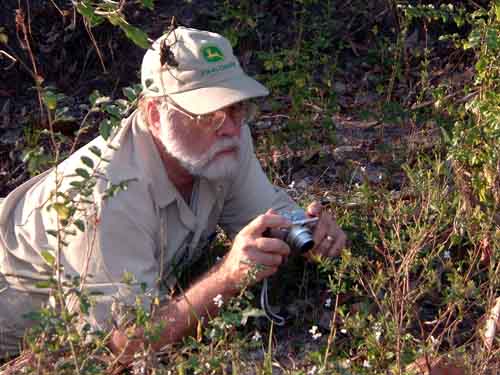



In 1974,
I came back to Louisiana after spending about four years , off and on, in
Tempe, Arizona at Arizona State University. I came back because it didn't look
like a Doctorate was going to happen. I
had always enjoyed fishing, and I knew that some people make a living catching
and selling fish. I wondered if I could
do that too. So, I got a commercial
license (?) and bought some nylon line and set out to learn to fish catfish,
etc., in the Atchafalaya River Basin.
After about a week of not doing very well, one day I went to my line and
found a "real" fisherman there.
He was Joe Sauce, 20 years old.
I said "Hello" and he asked why I had tied my line to a pole
that he had placed there and tied his line to.
I apologized and he said, "No problem" and then asked what I
was doing there. I said I was trying to
become a fisherman. His response was
"Like that?" Sensing his
negative judgement, I asked what I was doing wrong. He was a person who expressed himself freely,
and he mentioned about 10 things I was doing wrong. Since he did this with kindness, I asked if
he would mind teaching me the right way to do these things, and he talked for
about 15 minutes [maybe not that long] nonstop explaining the right way to set
a trotline under the current conditions.
Well, this was the teacher for
me! But I was in conservative country,
and I had shoulder-length hair and a full beard, neither of which was common in
south Louisiana at that time. He said,
“Are you one of those hippies?” Knowing that if I said “Yes”, his offer could
evaporate, I said, “No, I just need a haircut”.
He seemed OK with that, and off we went, him expertly practicing his
craft, and me paying attention to everything he did. For the next several months, if he spit into
the water, I knew what side and how far it went! Gradually, after many days, I started doing
some things well enough to get a quiet “OK” from him. In the previous year, I had passed all seven exams
for a PhD program entrance, the first to pass all seven exam- days the first
time through. Previous students had to
retake at least one of the seven days. And
I was more concerned that Joe would say “Ok”, than about those PhD requirements! OK, one hurdle cleared, sort of. But now there was another one. If you catch fish, how do you turn them into money? Obviously, somebody had to pay you for the
fish you caught.
Most of
the time there is an established link between the fisherman and the person who
pays him. Either the next step, the fish
dock, has a collection system that has trucks that visit the fishermen and pays
them for the fish they catch. But at
Myette Point, there was no way for a truck to reach the fishermen’s location unless
one of them took it upon himself to acquire a truck, pay the fishermen, to
delive the fish to the dock miles away.
This person was Albert “Myon” Bailey, a fisherman himself, and a
resident on the levee in the community of Myette Point. He purchased a vehicle that could traverse
the several miles of shell road and deliver the “community” fish to the dock at
Calumet about 15 miles away. This was
entrepreneurship at its best. So, about
15 fishermen would come by boat to the levee, where they lived, at the Myette
Point Community, sell their fish to Myon, who would pay them cash for the fish,
and deliver the fish to the commercial fishdock, completing the required path from
the harvester of a product [fish and other materials] by the commercial fishermen,
to the next step in the processing of the fish, the commercial dock. From there,
the fish would either be sold retail to individuals or wholesale to larger
communities, some as far as the West Coast of the U.S. This
latter would require ice for safe shipment by train. If something happened to delay the train en
route, and the boxcars containing iced fish were delayed several days, the fish
would spoil. In these early days, there
was no mechanical refrigeration, only ice, which melts.
And so,
I became a fisherman, or at least I thought I was. One big thing remained to complete the
process of earning a living…somebody had to agree to buy the fish I would
catch. Since I fished from the Myette
Point landing, the resident fish buyer was Myon Bailey. He held all the power now. If he didn’t like the way I looked, or for whatever
reason, he said “No”, I was not going to fish.
But he said “Yes”, and I about floated with relief. I was a member of
“the community”, and the feeling of belonging was awesome. Now I just needed to
catch fish to sell to him.
So, I
began to set lines with hooks to catch catfish. Using the advice Joe Sauce had shared with
me, I soon had 1000 hooks in the water.
Now, what came next was how to get bait and what kind of bait to
get. This was not simple, you had to
learn how to catch bait, not buy it. And
now comes the next person who became my teacher. It was Joe’s father, Cleo (Neg) Sauce. He was an easygoing person who
agreed to let me follow him around and learn his tricks, which I gratefully
did. Knowing Neg was the reason I got my
first real line fishing boat. It was a
gift from Neg and his wife, Nine.
[pronounced Neen]. The boat was
about 14 feet long and made of cypress…a typical “skiff”, with a blunt bow at
the front. The boat had been sunk for a
long time to preserve the cypress, and it worked, once it dried out, and the
bottom was replaced [due to age and long use], it was a perfect line-fishing
boat.
That Easter I was invited to Neg’s
house for dinner with his family. When I
got there, I met the children, who included Joe and his 4 sisters. The meal was a fish dish, which was
excellent! After that invitation, I
really felt that I was more and more being accepted to the extent an “outsider”
could be. A few days later, Neg showed
me how to catch river shrimp by finding a bayou bank with willow roots growing
underwater and scraping the roots with a net to catch the shrimp hiding
there. It was a good thing to learn,
however, from others I learned that you could make “shrimp bushes” out of wax
myrtle branches and suspend them in the water to attract river
shrimp. It was more work than “dipping
the roots” but more reliable and you could control the number of bushes you
made to attract the shrimp. More about
shrimp bushes later.
But now, let’s start back in 1974, when I made the first audio recordings of Myette [me ett] Point people. It begins with Albert “Myon” Bailey, considered the patriarch of the community by some, and his wife Agnes.
Blog Chapter 1
DATE: 1974
INTERVIEWER:
LOCATION: Albert (Myon) Bailey’s house at Myette Pt., St. Mary Parish,
COOPERATORS: Myon Bailey, Agnes Bailey
Myon was
married to Agnes Sauce, the oldest child of Blaise Sauce and his wife
Rosalee. Agnes had 5 younger brothers
and one sister. Blaise Sauce died at age
41, leaving his wife and six children without income. Myon decided that it was
his responsibility to take charge of the remaining 5 children. He was talking to Agnes about how best to
teach the boys to earn an income by fishing.
Myon: “Oh Mother, you broke, we ain’t got no money? You would like to go back up the lake and fish? Right there at Blue Point. Leaving from Lake Verret. That’s where I was supposed to be headed.”
Mertile Theriot, the fishboat operator says “I tell you what…” he says… Them boys was young, you see? Myon said, “Look, I’m takin responsibility for all their bills, that’s on me”.
JD: When you say “Them boys were young”, which boys are you talking about?
Agnes: My brothers.
Myon: Monug (Preston), he died…and, and Robert, he lives in Calumet, and …
JD: Are those your brother?
Myon: No,
Agnes’s brothers. Several of em. So, I told Mertile that. And he say “What you
need?”. Well, I say, “First I need about 30 gallons of gas”
JD: Was he living with y’all (her brothers)?
Agnes: We (Agnes and Myon) lived with them.
Myon: We
lived with them ‘till I got em out of debt.They had a big camp, we had a lil
camp, that’s the way it was.The large campboat had belonged to their father,
Blaise Sauce, who had recently died at age 46, leaving his wife
JD: A floating houseboat?
Myon: Yeah. So, I told em, I says, “Boys, it’s this a way”, I say, “Y’all gone live with me. Y’all gone do what I say, now. I’m y’all daddy for a while. What I say gone go.”
JD: How old were they, the oldest one?
Agnes: Oh, Monug must have been about 20…
Myon: Mmm, I don’t think that old.Tootsie about 15.
JD: And how about you?
Agnes: Monug must have been about 18 when daddy died.
Myon: I guess. I don’t know, I must have been about
45. I guess, around there. So, they
agreed to that. “What you say, go”. Pull
(row) up the lake, there,
JD: Who?
Myon: Bootsie’s wife. I say, “Y’all gone make a
living for them now,
JD: How many boys?
Myon: Two…
Agnes: Three, three boys.
Myon: Anh? Well, Neg…Neg was a lil boy…Neg wasn’t old enough yet. And, after that…”That’s…that’s y’all part now” I say, “I’m goin on my own”. I didn’t want to run their life all the time, you see?
(To
clarify, there were two young men, Preston [Monug]
Myon: So, they agreed to that. And them boys done
good for theirself. They built a new campboat
JD: Where did y’all build it?
Myon: Right at Blue Point.
Agnes: That cabin Neg’s got…Neg’s livin in (living at Oxford in the cabin off of that houseboat)?
Myon: Yeah, that cabin Neg’s got, that was the campboat.
JD: Well,
there must have been a lot of good l
Myon: Oh YEAH.That’s what I tell you, in them times you didn’t have high water like you got there now.They had ridges…all of that was nothin but ridges. Along the lakeshore, all that was out of the water all the time, or most of the time. Oh, you get a high water in the spring of the year, but it wasn’t no more than two or three feet.
JD: And then it went back?
Myon: And
then it went out. And them boys done good for themself,
JD: And you pulled everybody out of debt that quick, y’all made over $800…yall made over $800 that month?
Myon: Oh yeah! And live! Live with that. We had three
boats we was runnin. You see, I had one
man, one boy, just a…it was Tootsie…after bait, all the time. Me
JD: You mean you had one man going after bait full time?
Myon: Full
time.That was his job. Me
JD: What kind of bait was he catching?
Myon: Mostly live perch. We fish with cut bait, you see, with cut perch.In that time, that’s what we were using.
JD: Cut perch. It didn’t matter how big they were, or…?
Myon: No. Just (big enough) to make a cut bait. Just cut it up for bait.
JD: Traps? He was using traps to catch perch?
Myon: No. Well, he had traps, but he’d go over there
AB: If they didn’t bite (the perch), he’d dip em, under the lilies.
Myon: Sometime…sometimes he come
JD: How long a day?…now, you say you had 1000 hooks when you left Morgan City…you each took about 500?
Myon: Oh, we ended up with more than 1000 hooks. We
started with that,
JD: Yeah, to make a livin for yourself (one man). That was plenty. How long a day do you think yall were putting in, in those days, like that?
Myon: Jim, we didn’t fish all day long. But every
day we’d go…we’d run our line,
JD: And yall get across in a powerboat?
Myon: Yeah, we had them Lockwoods. Two-horse Lockwoods, six-horse Lockwoods. I used to have two-horse Lockwoods I fished all the time in. I had a six-horse too, a lil bit faster, you know?
JD: Skiffs?
Myon: Skiffs, yeah.
JD: What kind of line did you fish in those days?
Myon: Cotton. Cotton line,
JD: And y'all
h
Myon: Yeah.
JD: You still fished with swivels back then, eh? Well, did your lines look like bent lines like we fish now?
Myon: Yeah.
JD: But
you’d drive poles, or you use stob poles?
Myon: No, we didn’t use stobs in them times. We drove poles all the time.
JD: Just poles. Boy, that’s really something.
Myon: Yeah. And you made that much money,
Agnes: Shee, when we was getting eight cents a pound, we was getting plenty!
Myon: I remember we was getting around ten cents a pound for our fish then, eh? I don’t remember exactly, but in them times around ten cents. That was a pretty good price.
JD: That was around 1938, somewhere in there?
Myon: Umhm.
JD: And then when the war broke out, 1940, let’s say, the price of fish must have gone up pretty good, eh?
Myon: A little bit, Jim, umhm. But they had boats
come there
JD: And y’all would sell to him.
Myon: Well, we’d sell some.Try to keep him in there to hold the price up.
posted by jim | 4:46 PM
|
0 comments

